
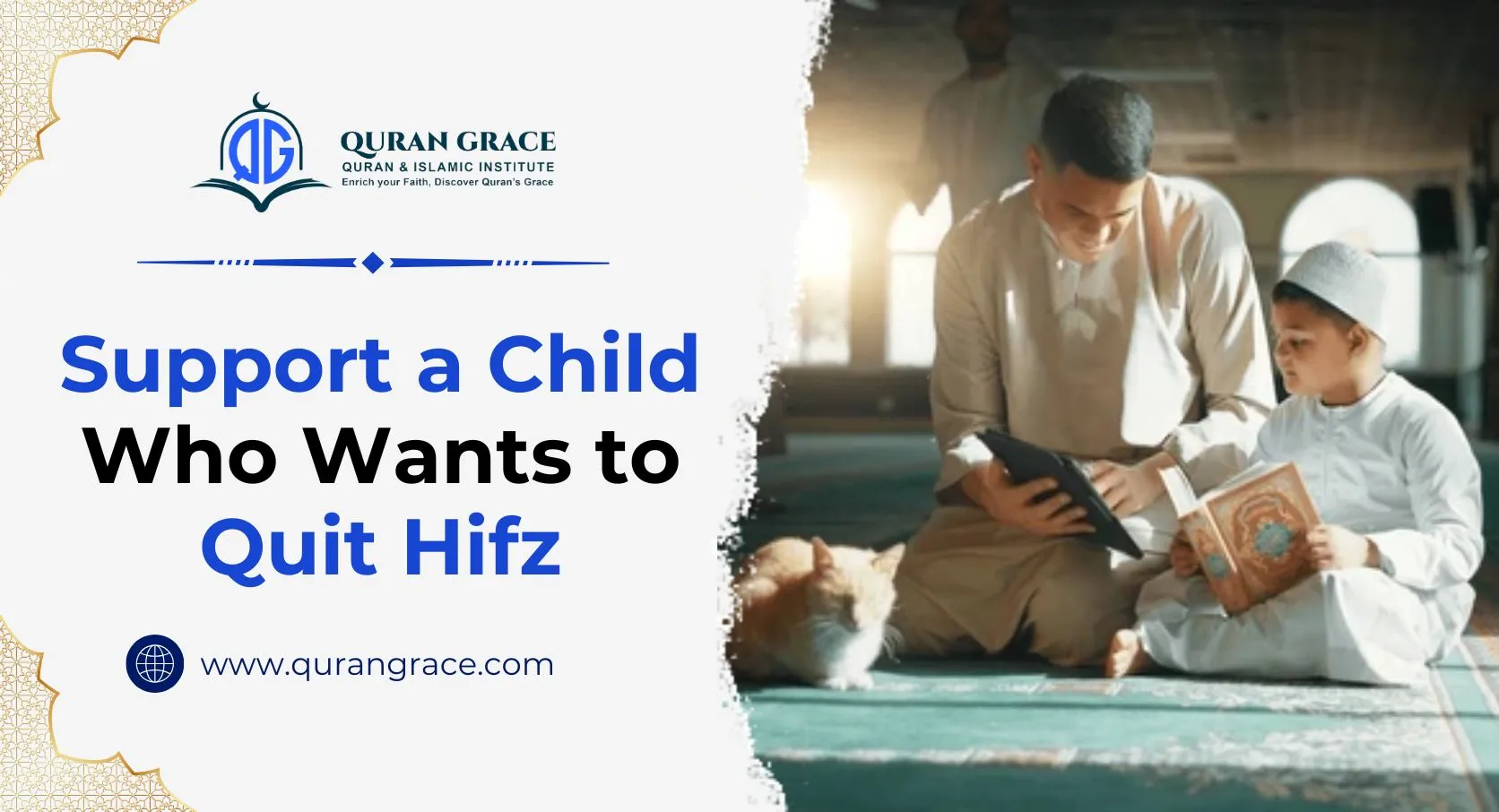
Success in Hifz isn’t measured by the number of pages completed; it’s measured by the connection built with the Creator. When a child wants to quit, it’s rarely because they’ve lost love for the Quran; it’s usually because they’ve lost their way in the process. A well-structured hifz course for kids focuses not just on memorisation, but on nurturing motivation, balance, and spiritual growth. From uncovering hidden burnout triggers to pivoting your approach, here is your guide to supporting your child through the hardest miles of their Hifdh journey.
Table of Contents
ToggleTips to Support a Child Who Wants to Give Up
Parents must keep the fact in mind that every child is different and not everyone can memorize the Quran. You need to be a constant support for your child and provide them with a positive learning environment to bring them back on track.
1. Uncover the “Why” Before You React
When a child says, “I want to quit,” it is often a cry for help rather than a rejection of the Quran. Before responding with a lecture, sit down and listen. Ask open-ended questions:
- Are they afraid of a strict teacher or feeling bullied by peers?
- Is their schedule too packed with school, sports, and Hifz?
- Sometimes kids get stuck on a difficult Surah and feel they aren’t “smart enough” to continue.
- Do they feel like they are just reciting sounds without knowing what Allah is saying to them?
2. Shift from “Pressure” to “Partnership.”
When encountering challenges with the current pace of Hifdh, it is advisable to adjust the pace rather than halt progress entirely. For instance, if memorizing a full page daily proves difficult, consider reducing the target to half a page or even three lines. The key lies in maintaining consistency, as the blessings come from steady practice rather than the rapidity of memorization.
Additionally, taking a brief break, such as one week away from active memorisation, while still engaging with the Quran through listening, can help rejuvenate a fatigued mind and enhance focus upon returning to the practice.
3. Re-Ignite the Heart
Children often view Hifdh as a chore because they’ve lost sight of the reward.
- Remind them of the Hadith where the parents of a Hafiz are given crowns of light on the Day of Judgment. Tell them, “I don’t want you to finish for the title; I want to walk into Jannah with you holding my hand.”
- Spend time reading the Tafsir of the Surahs they are memorising. When they realize they are reciting the story of Yusuf’s bravery or the miracles of Musa, the verses become alive.
4. Audit the Environment
- The teacher-student dynamic plays a crucial role in a child’s willingness to continue their journey with the Quran, and it is often the most prevalent reason for their disengagement.
- When teachers rely on fear or shame as motivators, it can create a negative association between learning and trauma for the child. In such cases, if the relationship between the teacher and student deteriorates, it’s essential to seek out an educator who adopts a nurturing approach, known as Tarbiyah, accompanied by positive reinforcement techniques. This method fosters a supportive environment that encourages learning without fear.
- Additionally, the home environment plays a significant role in a child’s Quranic education. Is the atmosphere quiet and peaceful during Hifz time? Are family members visibly engaging with the Quran themselves?
- The Quran should be integrated into everyday family life rather than viewed solely as an academic subject during Hifz sessions. Emphasizing its role as a vital part of identity can deepen children’s connection and appreciation, enhancing their motivation for studies.
5. Use the “Incentive” System
- Children need to have sincere intentions, but it’s also crucial to understand that they are naturally motivated by immediate rewards. To encourage their progress, consider celebrating their achievements regularly rather than waiting for a significant milestone like the completion of a Khatam.
- For instance, you can mark the completion of each Juz with a small celebration, which might involve throwing a small party, treating them to their favorite meal, or purchasing a toy they’ve been wanting.
- Additionally, utilizing a sticker chart can be an effective way to provide daily motivation. Offering a small treat for completing their new lesson without any fuss can reinforce positive behavior and make the learning process more enjoyable for them.
6. Know When to Pivot
Islam does not require every child to become a Hafiz. If you’ve tried various methods, adjusting the pace, changing teachers, or offering incentives, and your child continues to show signs of significant distress or develops a dislike for the Quran, it might be time for a change in approach.
Consider shifting from Hifz to Nazira (reading) and Fahm (understanding). It is far more beneficial to have a child who cherishes the Quran and has memorized the last Juz with comprehension than to have a Hafiz who dreads picking up the Book again.
Concluding
It’s important to remember that your child’s ability is not determined by the number of pages they have memorized or the accolades they receive in hifdh classes. Each child is unique, with their own strengths, talents, and potential. Rather than focusing solely on achievements, nurture their character, self-esteem, and love for learning. Encourage them to explore their passions and interests, and provide a supportive environment where they can truly thrive.