
The word “Tajweed” literally means “to make beautiful” or “to improve.” In the context of the Quran, it refers to the set of rules that govern the correct pronunciation of the Arabic letters and words. Most Islamic scholars emphasize the importance of Tajweed, as it is regarded as essential for the proper recitation of the Quran. In essence, understanding Tajweed rules is crucial for achieving a complete and meaningful recitation. This blog post will explore the concept of Tajweed, highlight its significance, and outline the obligations surrounding its practice.
Table of Contents
ToggleWhy is Tajweed Compulsory or So Important?
Tajweed plays a crucial role in the recitation of the Quran for several important reasons:
- Preserving the Meaning: The Arabic language exhibits a high degree of sensitivity to pronunciation. Even a slight alteration in the sound of a letter can dramatically change the meaning of a word. For instance, the subtle distinction between the letters “س” (seen) and “ص” (saad) illustrates how improper pronunciation can lead to misunderstandings of verses. Tajweed ensures that the Quran’s intended message remains intact and unaltered.
- Following the Sunnah: The practice of Tajweed is rooted in the traditions of Prophet Muhammad (peace be upon him), who recited the Quran with great care, emphasizing the correct pronunciation of each letter and word. By learning and applying Tajweed, individuals are directly adhering to the Prophet’s practice and honoring his legacy.
- Respecting the Word of Allah: The Quran is regarded as the literal word of God, and reciting it with precision and beauty is an expression of respect for its divine nature. Tajweed facilitates a careful approach to recitation, ensuring that the Quran is treated with the reverence it merits.
- Enhancing the Spiritual Experience: Reciting the Quran according to the rules of Tajweed not only ensures accurate pronunciation but also adds a melodious and aesthetically pleasing quality to the recitation. This enhances the spiritual experience for both the reciter and the audience, fostering a deeper connection with Allah.
- Avoiding major mistakes: Tajweed’s usefulness lies in its capacity to discriminate between correct and incorrect makharij, which will ultimately assist you in avoiding the mistakes that most non-Arabs commonly make when reciting the Qur’an. Certain errors can even alter a word’s meaning, which can result in sin.
The Ruling on Tajweed: A Compulsory Obligation (Fard)
According to the Quran and the teachings of the Prophet Muhammad (peace be upon him), the majority of Islamic scholars agree that mastering the basic rules of Tajweed is considered a fard ‘ayn, or an individual obligation, for every Muslim. This means that each individual is accountable for ensuring that their recitation of the Quran is accurate and performed to the best of their ability. This principle is supported by Surah Al-Muzammil, verse 4, which states,
“and recite the Quran with measured recitation.”
The word “measured recitation” (tartīla) is understood by scholars to mean reciting with Tajweed, carefully and precisely. Understanding and applying Tajweed is essential for proper Quranic recitation and is a key aspect of Islamic practice. So every muslim should learn in advanced tajweed lessons to improve their quran recitation.
Learn Tajweed As A Beginner
If you are a complete beginner, start by learning the Arabic alphabet and basic pronunciation. Practice reciting what you can, even if it isn’t perfect. Your intention and effort are what matter most. The goal is to improve continuously.
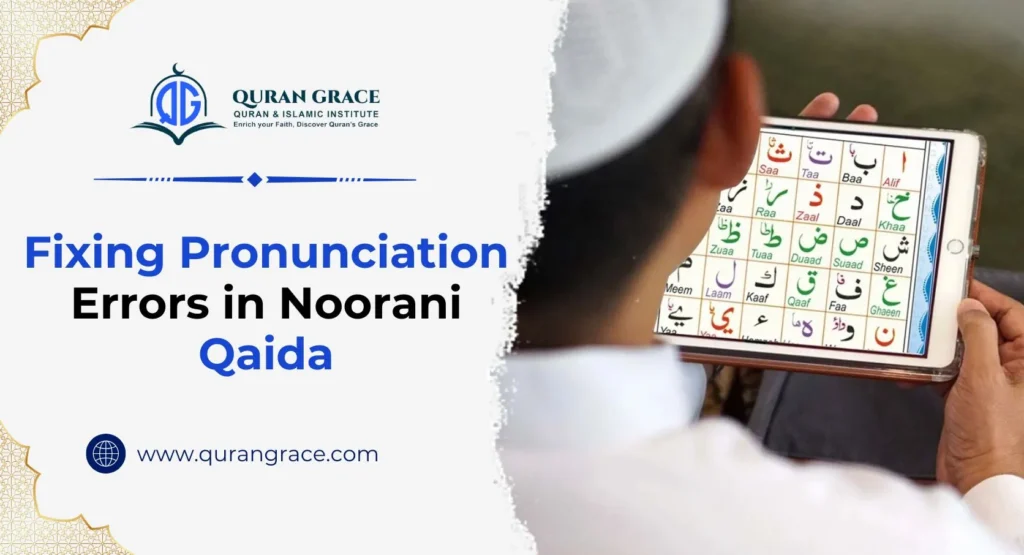
If you can read but struggle with Tajweed, make a conscious effort to learn the rules. There are countless resources available today, including online Tajweed classes from Quran Grace, various apps, and local Quran teachers. Even learning one rule at a time is a significant step forward.
If you make a mistake in pronunciation or a rule that doesn’t change the meaning of the word, it is considered a minor mistake (lahn khafi). While it is important to work on these mistakes, they do not invalidate the prayer or recitation. However, if the mistake is severe enough to change the meaning of the word (lahn jali), it is classified as a major error that must be corrected.
We recommend learning all Tajweed rules from a certified teacher and applying them in your daily Quran recitation to work towards perfection.
Conclusion
Tajweed isn’t just a set of rules; it’s a gateway to a richer and more profound connection with the Quran. Think of it as an exciting journey where every step leads you closer to understanding Allah’s words. Take the plunge today by signing up for a free consultation with a certified Egyptian quran tutor from Quran Grace. Our dedicated tutors will assess your current level and craft a personalized course just for you, tailored to fit your schedule. Let’s embark on this journey together!