
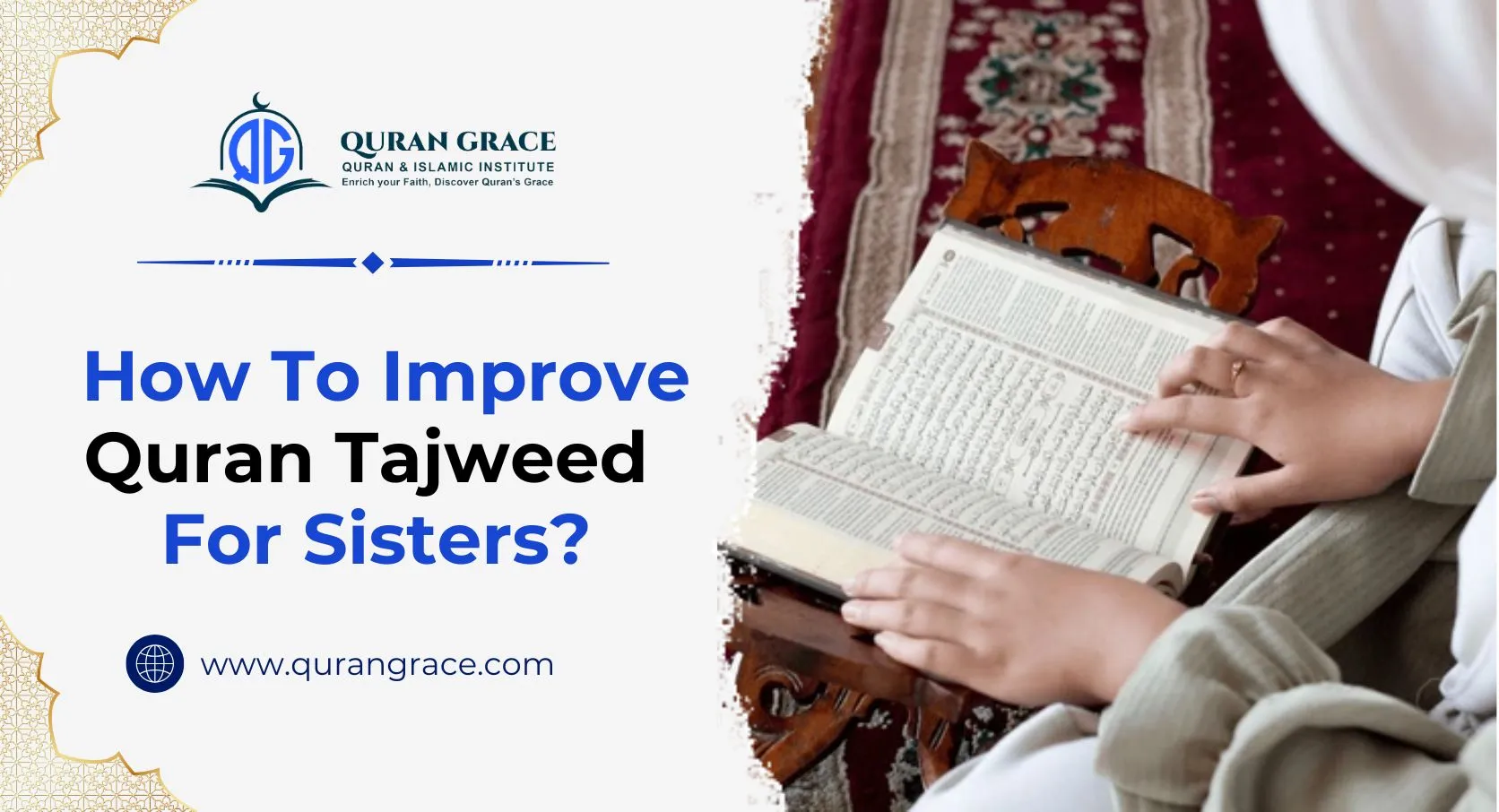
For many sisters, the desire to recite the Quran with proper Tajweed is a heartfelt journey. But what if you don’t have access to a local teacher? Perhaps you live in a non-Muslim majority country, have scheduling constraints, or simply lack access to qualified female instructors. The good news is, mastering Tajweed independently is more achievable than ever. With dedication, organized structure, and the right resources, you can transform your recitation from anywhere in the world with certified Egyptian or Arabic tutors in online tajweed course.
Table of Contents
ToggleStep-by-Step Guide to Improve Quran Tajweed for Sisters
Here is step-by-step approach shared by Quran Grace teachers for sisters whos are seeking to improve their quran tajwid.
Step 1: Work on your intention, consistency, and basic learning
Before diving into rules, set your intention and ground yourself.
- Set Your Intention: Remind yourself that this journey is solely for the sake of Allah, to recite His words as revealed. This spiritual anchor will keep you motivated.
- Assess Your Current Level: Record yourself reciting a familiar surah (like Al-Fatiha). Listen critically. Identify one area to improve first—don’t overwhelm yourself.
- Learn the Arabic Alphabet & Phonetics: If you’re not already confident, mastery starts with each letter’s Makhraj (point of articulation) and Sifaat (characteristics). Use visual charts and videos to understand where sounds originate (e.g., throat, tongue, lips).
Step 2: Build Your Virtual Resources
You may not have a local teacher, but you can curate a powerful digital learning environment.
A. Primary Learning Platforms & Courses:
-
- Online Quran Academies: Many offer sisters-only classes with female teachers. Platforms like Quran Academy (with female teachers), Bayyinah TV (excellent, structured courses by Nouman Ali Khan), and Quran Grace provide flexible and structured Tajweed classes for women.
- YouTube Channels: Some highly respected channels offer free, detailed tajwid lessons. Look for those by certified instructors. Examples: Islamic Spirituality (Tajweed series), Tajweed Institute (animated videos), Quran Revolution (sister-friendly content).
- Mobile Apps/online websites:
- Tajweed Quran Apps: Interactive apps highlight rules as you read.
- Audio Recitation Apps: Like “Quranic” for phonetics.
- By enrolling in “Online quran recitation classes“
B. Your Go-To Reference Recitations (Tilawah):
Listen daily to reciters known for precise tajwid. Slow down the playback speed to catch subtle pronunciations. Key reciters:
- Sheikh Mahmoud Khalil Al-Husary (clear, rule-by-rule)
- Sheikh Abdullah Basfar
- Sister Fatima Stanza (for female recitation style inspiration)
C. The Power of the Mirror & Recorder:
Your smartphone is your best feedback tool. Use the front camera to watch your mouth shapes and tongue positions. Record your recitation weekly to track progress.
Step 3: Structured Self-Study Plan
Consistency beats intensity. Dedicate 30-45 minutes daily for optimal results.
- Day 1-2: Focus on One Rule. Example: The rules of Noon Saakin & Tanween (Izhaar, Idghaam, Iqlab, Ikhfaa). Watch multiple video explanations, write notes in your own words.
- Day 3: Listen & Repeat. Take a short ayah from your focused rule. Listen to a master reciter 10 times. Mimic, focusing on the sound, not just the rule.
- Day 4: Record & Compare. Recite the same ayah, record yourself, and compare side-by-side with the master recitation. Note differences in melody, elongation, or pronunciation.
- Day 5: Apply in Context. Read a new page of the Quran, slowly applying that week’s rule. Don’t rush. Speed is the enemy of Tajweed.
- Day 6: Revise & Reflect. Review your notes, listen to your recordings from the past weeks. Celebrate improvements.
- Day 7: Join an Online Tajweed Circle or Forum. Participate in communities (see below) for motivation.
Step 4: Overcome Common Challenges
- Lack of Feedback: Some apps offer AI-powered tajwid feedback (though they don’t replace human teachers, they can flag obvious errors). Periodically, consider booking a one-time online session with a certified female teacher for assessment—many offer trial or single-class options.
- Motivation & Accountability:
- Find a Tajweed Buddy: Connect with another sister online. Share recordings, set weekly goals, and encourage each other.
- Join Virtual Communities: Facebook groups, Discord servers, or sister-only forums dedicated to Quran learning. Participate in challenges (e.g., “30-day tajwid challenge”).
Step 5: Integrate Tajweed into Your Spiritual Life
- Apply in Salah: Immediately use the rules you learn in your daily prayers, even if slow. This embeds them into practice.
- Teach What You Learn: Explain a rule to a family member or child. Teaching solidifies understanding.
- Make Dua: Never underestimate the power of supplication. Ask Allah to beautify your recitation and make the Quran the spring of your heart.
Conclusion
Pick one trusted resource, set a consistent time, and begin with an easy target. At Quran Grace, we believe the doors of sacred knowledge are always open to the sincere seeker. In this digital age, your teacher may be just a screen away through our advanced Tajweed course, but true success lies in your heart’s connection to the Words of Allah. May your recitation draw you closer to the Divine, and may every letter you recite with effort become a light for you in this life and the next. Ameen.