
For a mother, the heart is often pulled in a thousand directions. You want to be the best parent, a diligent homemaker, and a growing soul. Often, the dream of Hifz gets pushed to the “someday” pile, waiting for the kids to grow up, for life to slow down, or for a stretch of silence that never seems to arrive.
Your journey toward Hifz as a mother is uniquely rewarded because every verse you memorize is woven through the trials of service and sacrifice. Through hifz classes for ladies, and by partnering with a supportive community like Quran Grace, you can transform your home into a sanctuary of revelation—one verse at a time.
Table of Contents
ToggleA Sample Routine for the Busy Mother
| Time of Day | Hifdh Activity | Integration Tip |
| Pre-Fajr / Fajr | New Memorisation (Sabaq) | The house is quiet; 20 mins of deep focus. |
| Morning Routine | Audio Immersion | Play the Surah on a speaker while making breakfast. |
| Nap Time | Recent Revision (Sabaq Para) | Review what you learned in the morning. |
| Evening/Chore Time | Old Revision (Manzil) | Recite while cleaning or during the school run. |
| Bedtime | Mental Review | Recite the verses in your head as you fall asleep. |
7 Helpful Tips to Build a Hifz Routine for Mothers
1. The 15-Minute Rule
For mothers managing busy schedules, finding a two-hour block of uninterrupted time for Hifz can be challenging. A practical approach in this phase of life is to focus on micro-habits and follow a realistic timetable for Quran memorization that fits around daily responsibilities.
- The Power of Three: Consider setting aside three 15-minute sessions throughout the day. One session can be dedicated to new memorization after Fajr, another during a nap or quiet time for revision, and a final session before bedtime to reinforce your learning.
- The “Salah” Strategy: Incorporate your five daily prayers into your memorisation routine. By reciting your newest verses in each Rak’ah, you engage with your Hifdh at least five times a day, reinforcing retention and understanding.
2. Turning Chores into Worship through audios
While engaged in daily tasks, such as cooking, cleaning, or driving, it’s possible to utilize audio as an effective tool for enhancing learning. For mothers, audio can serve as a “secret weapon” for education.
- Passive Learning: One effective method is to play the Surah you are currently memosizing on loop. This approach allows your brain to familiarize itself with the rhythm and flow of the verses. By the time you dedicate focused time to looking at the Mushaf, you’ll find that your recognition and retention of the material have improved.
- Active Listening: Another technique involves listening to a Reciter who speaks at a slower pace, such as Al-Hussary. This method helps you concentrate on Tajweed and the subtle nuances of the letters while performing everyday tasks, such as folding laundry. Utilizing these audio strategies can significantly enhance your learning experience.
3. Creating a “Quranic Environment.”
Your Hifdh doesn’t have to be a secret activity. Involve your children!
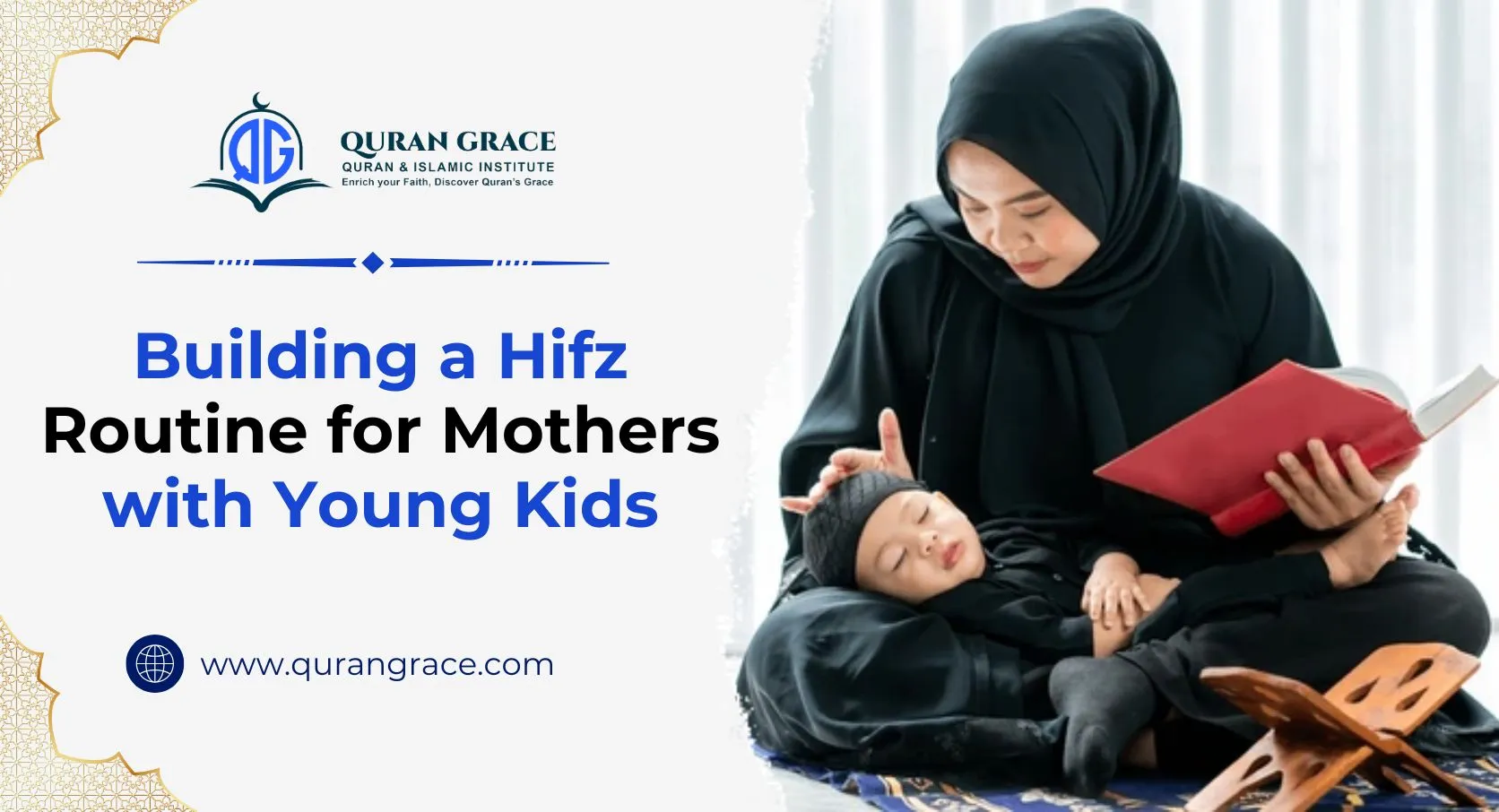
- The Shadow Effect: When your toddlers see you holding the Quran and moving your lips, they learn that Allah’s word is a priority.
- Recitation Over Play: Recite out loud while you are pushing the stroller or playing on the floor. It calms the children and provides you with extra revision time.
4. The Importance of Professional Guidance
Mothers often face significant challenges, one of which is a lack of accountability in their daily routines. When fatigue sets in, it’s not uncommon to miss a day of planned activities, which can quickly extend to a week.
Quran Grace addresses this issue by providing a structured environment in online hifdh program that helps mothers maintain consistency in their commitments. With instructors who are attuned to the challenges of managing the “motherhood mental load,” they offer flexible online sessions that can easily fit into a busy household schedule. This ensures that mothers have access to mentorship that not only corrects their mistakes but also supports their motivation and well-being.
5. Mental Resilience and Intentions
It is important to recognize that some days will inevitably be “low-output” days, especially when caring for children who may be teething or unwell. On such days, you might only manage to read one Ayah, and that’s perfectly acceptable.
Engaging with the Quran, even under challenging circumstances, is considered a significant act of worship in the eyes of Allah. It’s essential to refrain from comparing your progress with that of students in a Madrasah, as everyone’s journey is unique while still aiming for the same destination.
Conclusion
Creating a Hifz routine as a mother is a profound expression of love. It involves a shift from thinking in extremes, like “all or nothing,” to a mindset that embraces “always something.”
With the right perspective and the expert support of Quran Grace one-on-one hifz teacher, the Quran can become a cherished companion rather than just another item on your to-do list. Your children might not hold onto every toy you’ve ever given them, but the sound of their mother’s voice reciting the Quran every day will stay with them for a lifetime.