
Embarking on the journey of learning the Quran begins with a solid foundation. In the digital age, the transition from traditional classrooms to virtual screens has revolutionized how this foundational script is taught. At Quran Grace, we have observed that the effectiveness of an online quran tutor lies in their ability to blend traditional methods with modern interactive tools.
Table of Contents
Toggle8 Tips for Effective Online Noorani Qaida Instruction
1. Utilizing Digital Interactive Boards
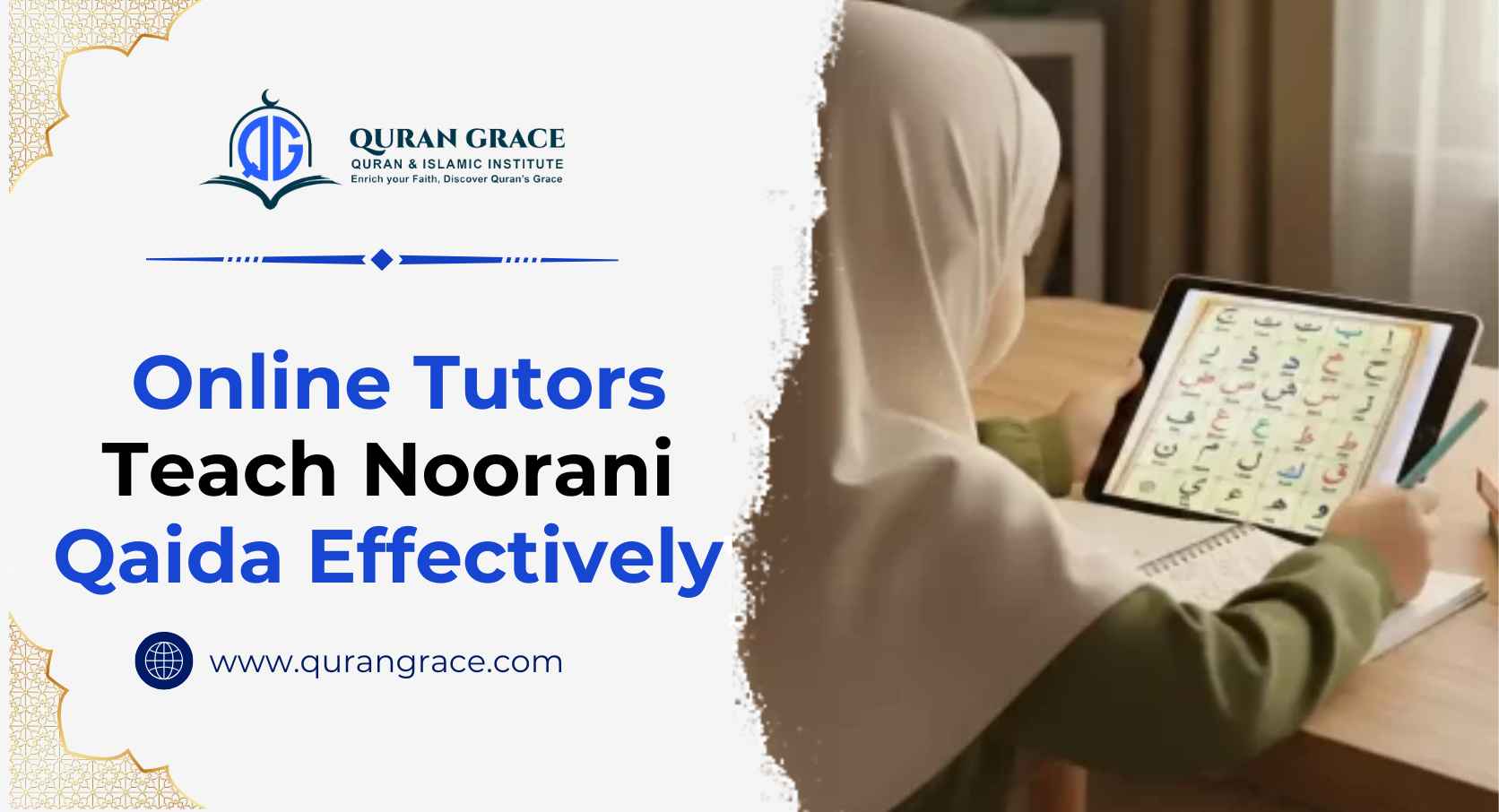
Tutors employ shared screens to emphasize particular letters and vowels during lessons, allowing for real-time interaction and focus. For those interested in a well-structured introduction to reading, the Quran Grace Noorani Qaida online Course is a great option. This course effectively utilizes visual aids to enhance letter recognition and support learning.
2. Focus on Makhraj (Articulation Points)
Online instructors employ high-definition cameras to demonstrate the precise positioning of the tongue and lips. This visual guidance is particularly beneficial for students as they practice challenging Arabic letters, such as Qaf and Ayn, enabling them to accurately replicate the correct sounds.
3. Gamified Learning
To capture the attention of young learners and maintain their engagement, effective tutors employ a variety of interactive tools and strategies. One popular method is the use of digital flashcards, which present letters and words in a visually appealing format that can easily draw children in. These flashcards often include vibrant colors, animations, and audio pronunciations, making the learning experience more dynamic and enjoyable.
In addition to flashcards, tutors also integrate matching games that encourage students to connect corresponding letters with images or words. These games not only reinforce letter recognition but also transform repetitive practice into an exciting challenge that sparks competition and curiosity.
4. Makhraj-Specific Audios
Tutors typically offer high-quality audio recordings of their lessons, enabling students to listen and practice throughout the week. This approach helps reinforce the concepts learned in the classroom, supporting better retention and understanding.
5. Step-by-Step Progress Tracking
Utilizing digital portals allows tutors to effectively monitor a student’s understanding of “Harakaat” (vowels) and “Tanween” (double vowels) before transitioning to more complex joining rules. This approach facilitates consistent progress tracking for both the student and the tutor, ensuring that each learner’s development is adequately supported.
6. Encouraging Repetition and Patience
In online tutoring sessions, the absence of physical presence necessitates the use of verbal encouragement and rhythmic repetition as key strategies to enhance students’ confidence in pronunciation. By consistently reinforcing concepts through repetition and demonstrating patience, tutors can effectively guide students in understanding the rules of Qaida in a virtual environment.
7. Screen Sharing Tajweed Rules
Utilizing color-coded Qaida pages for visualizing Tajweed rules can greatly aid students in quickly identifying and differentiating between various rules, such as Ghunna and Ikhfa. This method enhances comprehension by providing an immediate visual cue, making it easier for learners to grasp and apply the principles of Tajweed effectively.
8. Regular Parental Feedback
Effective online teaching relies on maintaining continuous communication with parents. This includes sharing short video clips or progress reports to help ensure that children are practicing correctly at home. These tools not only keep parents informed but also empower them to support their child’s learning more effectively.
The Core Components of Online Qaida Teaching
The main body of an effective Noorani Qaida curriculum focuses on three critical pillars: Recognition, Pronunciation, and Connection.
1. From Recognition to Mastery
The first challenge for any student is distinguishing between letters that look similar but sound different. Online tutors break down the alphabet into groups based on shape. By using “spotlight” tools on digital platforms, they ensure the student isn’t just memorizing the order of the alphabet, but truly recognizing the individual forms of the letters Alif through Ya.
2. Perfecting the Vowels (Harakaat)
Once the letters are mastered, the focus shifts to the Fatha, Kasra, and Damma. This is where the “Online” advantage shines. Tutors can use interactive software where students click on a letter to hear its sound with different vowels. This multi-sensory approach—seeing, hearing, and speaking—drastically speeds up the learning curve compared to traditional methods.
3. The Art of Joining Letters
The final hurdle in the Noorani Qaida is learning how letters change shape when joined together. Tutors teach this by deconstructing complex words into their individual components and then reassembling them. This “Lego-block” style of teaching helps students understand the flow of the Arabic script, preparing them for the transition to the Holy Quran.
Conclusion
Teaching the Noorani Qaida online is more than just reading from a book over a video call; it is about creating an immersive, focused, and encouraging environment that transcends physical distance. By combining expert knowledge of Tajweed with the latest educational technology, online tutors at Quran Grace ensure that every student builds a Tajweed-perfect foundation through engaging noorani qaida for kids lessons and personalized learning support.